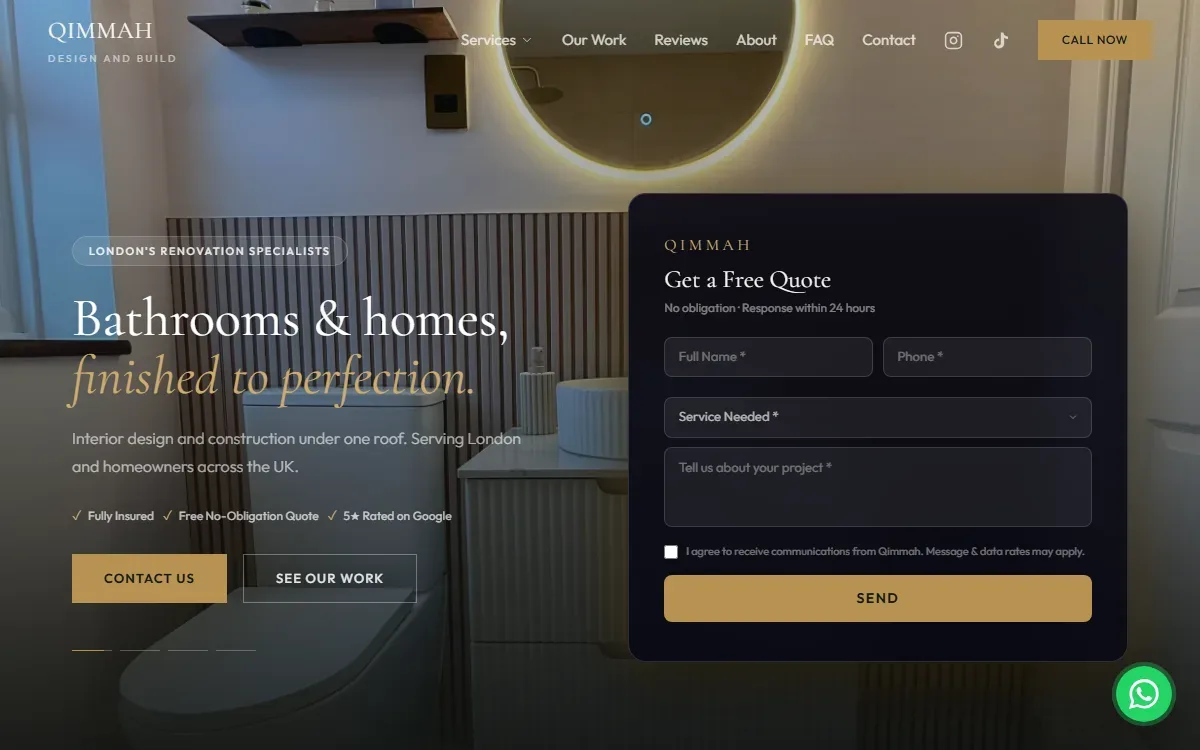
A Facebook page is enough to show your work to people who already know your name. It is rarely enough to be found by a stranger who searches Google for your trade in your town. Most advice on a Facebook page or website for tradesmen treats it as a choice between the two. It works better as a pair, with each one doing the job it is good at.
What a Facebook page does well
A page costs nothing and takes an evening to set up. Your customers are already on Facebook. Ofcom's Online Nation 2025 report found that the Facebook app reached 85% of UK adult smartphone users in May 2025, and 63% opened it on a typical day.
That reach makes a page useful for a few things:
- Posting a job the day you finish it, straight from your phone on site
- Answering messages from people who saw your van or a neighbour's post
- Keeping past customers aware of you, so they think of you for the next job
- Replying in local community groups
The local groups are where Facebook earns its keep. Someone in a Halifax residents' group posts "Can anyone recommend a plumber for a leaking stopcock?" and twenty people tag a name. Where the group allows it, you can reply as your business page. A happy customer tagging your page in that thread is worth more than any post you write yourself.
Where a Facebook page stops
Strangers search Google first
Facebook works on people who already know you or know someone who does. A homeowner with no recommendation does something else. They type "electrician in Rotherham" into Google and ring someone from the first screen of results.
BrightLocal's Consumer Search Behavior research, a 2025 survey of 1,000 US consumers, found that 45% default to Google when searching for a local business, and a further 15% start in Google Maps. Social media platforms combined were the first port of call for 14%. It is a US survey, so treat the exact figures with care, but the pattern matches what you see when you search for your own trade.
A Facebook page usually shows in Google when someone searches your business name. It rarely shows for a search about the job and the town, because Google ranks pages written about that job in that place. Our guide to local SEO for trade businesses explains how Google decides who appears for those searches.
Your best work sinks down the feed
Facebook sorts everything by date. The loft conversion you finished in March sits under forty posts about bank holiday hours and a van for sale. A customer looking for a loft conversion has to scroll to find it, and most will not.
A website gallery sorts your work by what the customer wants to see. Kitchens with kitchens. Extensions with extensions. Each job can carry a line about what was done and in which town.

This is how the portfolio works on the Lumina Designed site. Commercial and residential projects sit under their own filters, and each project opens to its own page of photographs.
There is no page for each service
A Facebook page has one "About" section and one feed. A roofer who does flat roofs, chimney repairs and new slate roofs has nowhere to explain each one. A website gives every service its own page, written for the search that brings people to it.
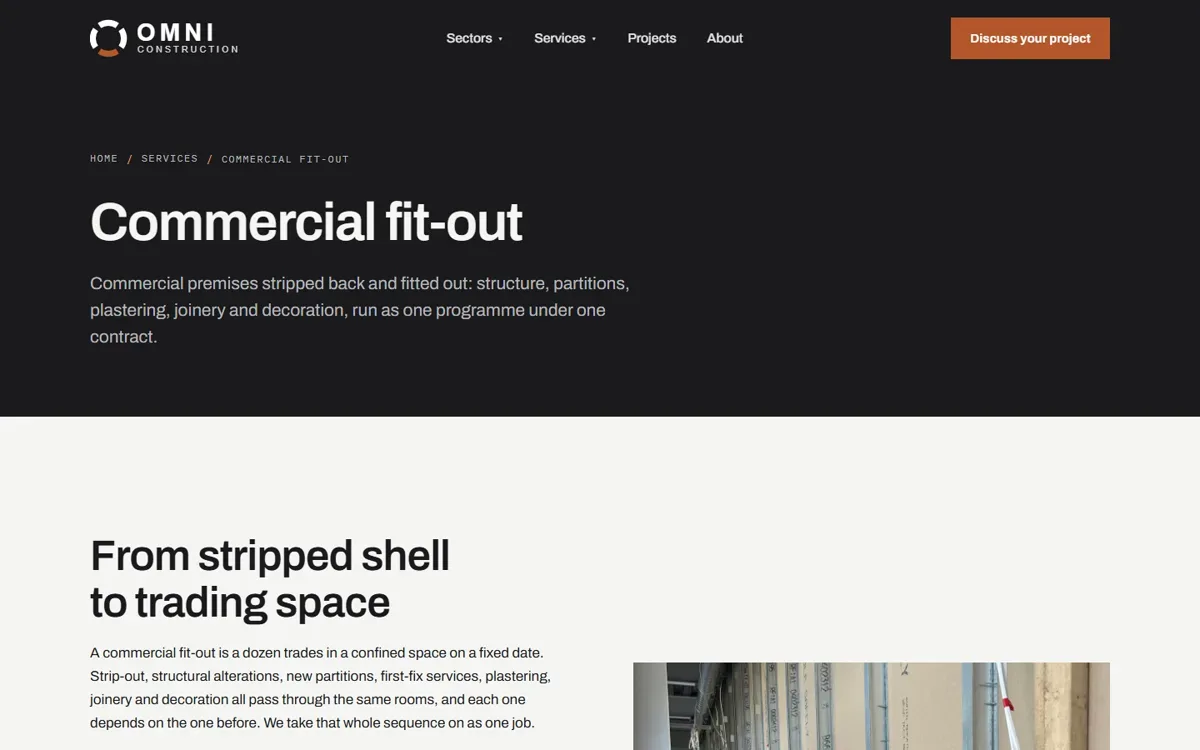
The site we built for Omni Construction Group has a separate page for each service and each sector it works in. Each page can appear in Google on its own, and each one answers the questions a client asks about that kind of job.
People trust Facebook less than you might think
Plenty of people use Facebook to look up a business. Fewer believe everything they read there. BrightLocal's Local Business Discovery and Trust Report 2023, a survey of over 1,000 US consumers, found that 30% use Facebook to find local business information at least weekly. The same report found that 43% did not fully trust the information they saw there.
A page alone can look like a side job to a homeowner about to hand over the deposit on an extension. Your own website, with your company details, insurance and real reviews in one place, answers that doubt before they pick up the phone.
You do not own the page
Meta sets the rules on Facebook and can change them at any time. If your account is hacked or restricted, you work through Meta's own recovery process, and your page and its messages are out of reach until that is resolved. You cannot take your followers or your posts with you somewhere else.
A website on a domain registered in your name is different. If you change web company, the domain, the content and the enquiries all come with you. Ask whoever hosts your website whose name the domain is registered in, and get the answer in writing.
When a Facebook page is enough for now
There are times when a page is the right place to start. If you have just gone self-employed and your diary is full from people you already know, a page and a free Google profile will carry you for a while. The same goes if you work almost entirely for one main contractor, or you have a waiting list months long.
In those cases, set up your Google Business Profile before you spend time on Facebook. It is free, it shows on Google Maps, and it holds the Google reviews homeowners check before they ring. Then build the website when you want work from people who have never heard of you.
How to make the page and the website work together
Run both and point each one at the other:
- Put your website address in the page's details and set the page's main button to call you or visit the site.
- Use the same business name, phone number and opening hours on the page, the website and your Google profile.
- When you post a finished job, link the post to the matching gallery or service page on the website.
- When you reply to a recommendation request in a local group, link to the service page for that job.
- Ask customers for a Google review first. Facebook recommendations are a bonus.
- Link to the page from your website footer only while you post on it every few weeks.
Done this way, Facebook brings people who already know you to the website. The website then catches the strangers searching Google and gives both groups the same clear way to get a quote. We covered the wider case for having a site at all in do tradesmen need a website.
Check where you stand in two minutes
Open a private browsing window on your phone and search for your main trade and your town, as a customer would. "Bathroom fitter Leeds" or "roofer Stockport". Note whether you appear on the first screen and what shows up when you do.
Then search your business name. If only the Facebook page appears for your name, and nothing appears for the trade and the town, you have found the gap. Customers who know you will find you. Everyone else rings someone who shows up.
Where SiteFlash fits
We build websites for trade and construction businesses that sit alongside your Facebook page and Google profile, with a page for each service and a gallery of your own jobs. You see a working concept of your site before you pay anything. Plans start at £149 a month with no upfront cost and no contract, and the hosting, domain and updates are included.