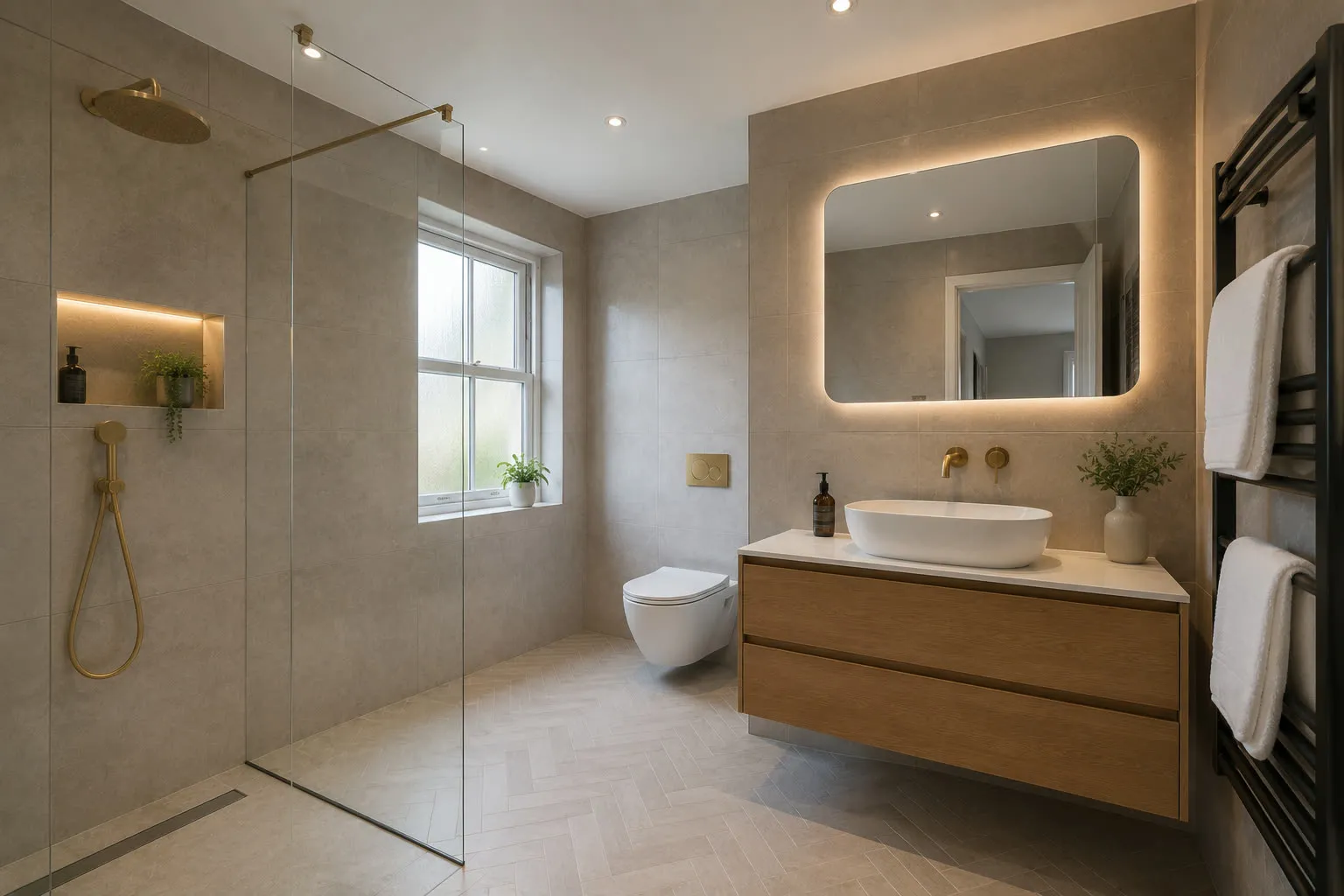
A bathroom fitter website has to answer the questions a homeowner asks before they let you rip out a room they use every day. They want to see finished bathrooms you fitted, know what your price includes and know how long they will be without a shower. Answer those three plainly and you are ahead of most fitters they compare you with.
Why bathroom customers read more than most
A burst pipe gets a phone call within minutes. A new bathroom does not. Most homeowners spend weeks looking at fitters, saving photos and asking friends before they ring anyone.
That changes what your site needs to do. An emergency plumber's site is built to get a fast call, which our plumber website checklist covers. Yours is built to survive a long, careful comparison. Every unanswered question is a reason to pick the fitter whose site did answer it.
Most of that reading happens on a phone, often in the evening with the old bathroom in view. Ofcom's Online Nation 2025 report found that smartphones accounted for 77% of the time UK adults spent online in May 2025. Your gallery has to look good on a screen the size of a hand, and your quote form has to work with a thumb.
1. Finished bathrooms you fitted
The gallery is the page homeowners spend longest on. It is where they decide whether your work matches the room they have in their head.
Show only your own jobs. A homeowner can spot a catalogue photo, and a gallery full of them suggests you have nothing of your own to show. For each bathroom, take these shots once the room is clean and the protection is up:
- One wide shot from the doorway, so they see the whole layout
- One close shot of the tiling, at a corner or around the niche
- One shot of the detail you are proud of, such as a concealed cistern or a linear drain
Add one line under each set with the job and the town. "Full family bathroom refit, walk-in shower and wall-hung WC, Harrogate" tells the reader more than a paragraph about attention to detail.
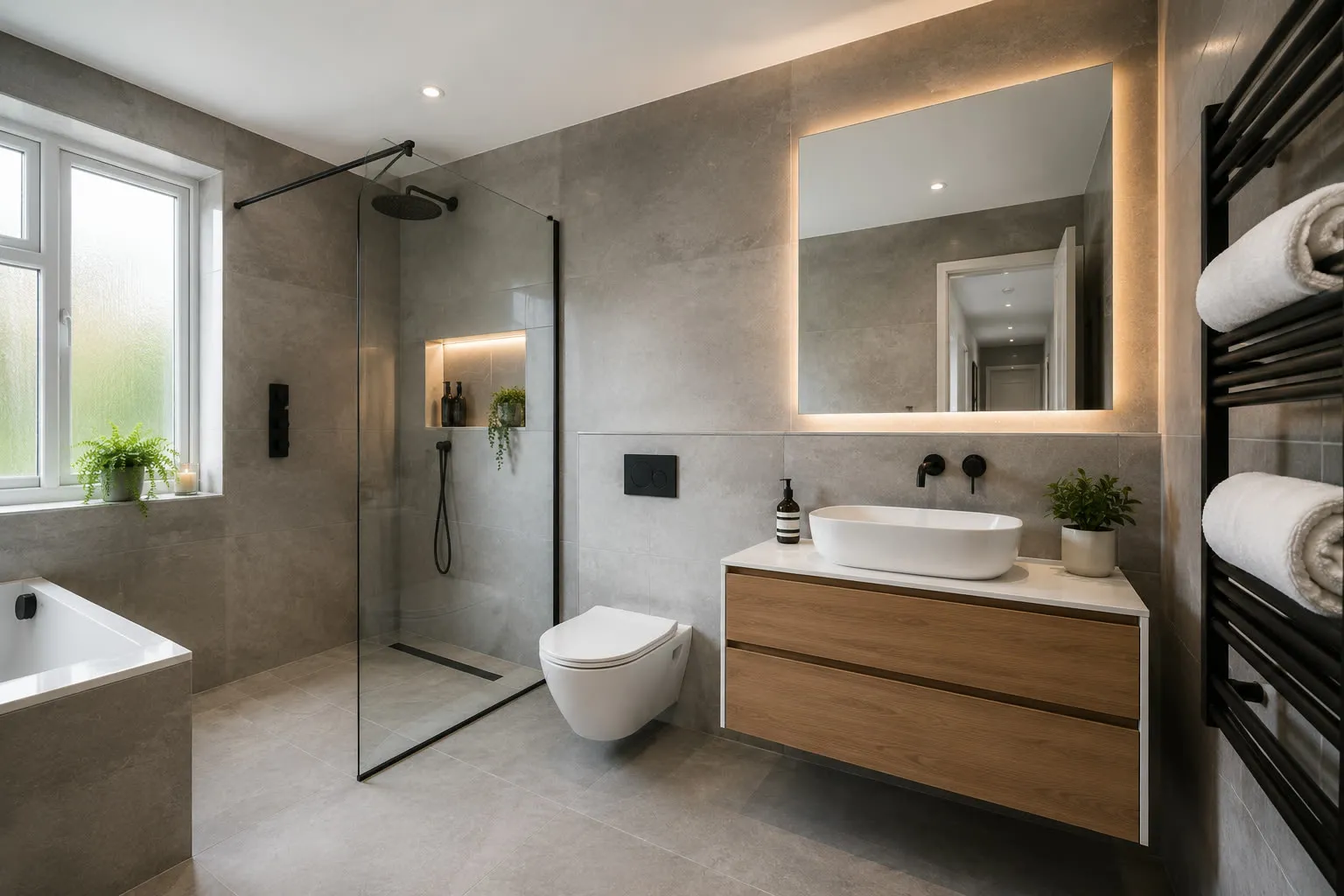
Sort the gallery so people find rooms like theirs. Family bathrooms, en suites, wet rooms and cloakrooms are different jobs. On the Lumina Designed site we split the portfolio into residential and commercial so each visitor sees the work that matches their own project first.
2. Supply and fit, or fit only
This is the question that causes the most confusion, and the most awkward phone calls. Some customers have already bought a suite from a showroom. Others expect you to source everything. Say on the home page which you offer.
Then give it its own short section on your services page:
- Whether you supply the suite, the tiles, or both
- Whether you will fit items the customer has bought, and what you need to see first
- Who checks that a bought item suits the room before it arrives
- Who handles a damaged or missing part
A fitter who explains this up front gets fewer calls from people who wanted something else. The calls that do come in are the right ones.
3. What a full refit includes
Two quotes for the same bathroom can differ by a lot because they cover different work. Help the homeowner compare fairly by listing what your full refit normally includes. A typical list runs from stripping out the old suite and taking it away, through first fix plumbing, boarding and tanking, tiling and second fix, to the final clean.
Then list the things that change the price. Moving the toilet away from the soil stack, tiling to full height, underfloor heating, replacing rotten joists. Most homeowners have never had a bathroom fitted. Explaining what moves the cost shows you know the trade and that your quote will not grow halfway through the job.
4. Who does the tiling, plumbing and electrics
A full bathroom involves several trades. Homeowners worry about a project manager who disappears and a string of strangers who blame each other. Say who does each part.
If you tile your own jobs, say so. If a regular tiler works with you, say that too. For electrical work such as a shower, an extractor fan or a heated towel rail, name who carries it out and how it gets signed off. Many electricians belong to a government authorised competent person scheme, which lets them certify their own work. If yours does, put that on the page. List only what you or your trades actually hold.
5. How long the bathroom will be out of use
A family with one bathroom wants to know how many days they will be washing at a relative's house. Give a typical range for each type of job, based on your own diary. A cloakroom, a straight swap and a full refit with a wet room floor take very different times.
Explain what can stretch it: waiting for a special order, tile adhesive that needs to cure, finding rotten boards under the old bath. Then say what you do to keep them going, if you do it. Some fitters keep the toilet working at the end of each day. If that is you, put it on the site.
6. Reviews that mention bathrooms
Show your Google rating and a handful of full reviews, with the customer's first name and town. Pick reviews that talk about the finish, the tidiness and how you handled a problem. Those are the worries bathroom customers carry.
Keep them coming in. BrightLocal's Local Consumer Review Survey 2026 found that 74% of consumers only care about reviews written in the last three months, and 68% will only use a business rated four stars or more. The survey covers US consumers, and we have seen nothing that suggests UK homeowners act differently. Ask each customer on the day you hand over the finished room, and send the link from your Google Business Profile by text that evening.
Use only reviews you can point to. A homeowner who checks your Google profile and cannot find the quote on your home page will doubt everything else on the site.
7. Your guarantee in plain words
Say what your workmanship guarantee covers and for how long. Separate it from the manufacturer's warranty on the products, because customers often mix them up. If a leak appears after six months, who do they ring and what happens next?
Add your public liability insurance, your company name, and your company number if you trade as a limited company. A homeowner letting you take up their floor wants to know you are a real business.
8. A quote form that asks the right questions
Bathroom customers prefer to send details and wait for a call. Keep the form short:
- Name and phone number
- Postcode
- Type of room, chosen from a short list
- Supply and fit, or fit only
- An optional photo upload of the current room
The photo lets you spot a tricky layout before you visit. After they press send, show a message saying when you will call. Silence after a form makes people think it failed, and they move on to the next fitter.
9. Service pages and the towns you cover
A single services page with a list of bullet points ranks for very little. Give your main jobs their own pages: bathroom refits, en suites, wet rooms, accessible bathrooms and tiling. People search for each of these by name, and each needs its own explanation and its own photos.

Then list the towns you work in, and add a short page for each main one with a bathroom you fitted there. That is how a fitter based in Leeds appears for a search in Wetherby. Our guide to local SEO for trade businesses explains how town pages and your Google profile work together.
Check your site against this list
Open your site on your phone and ask someone outside the trade to find three things: a bathroom like theirs, whether you supply the suite, and how long a refit takes. Time them. If any answer needs more than a few taps or a phone call, that is the first thing to fix.
How SiteFlash builds this in
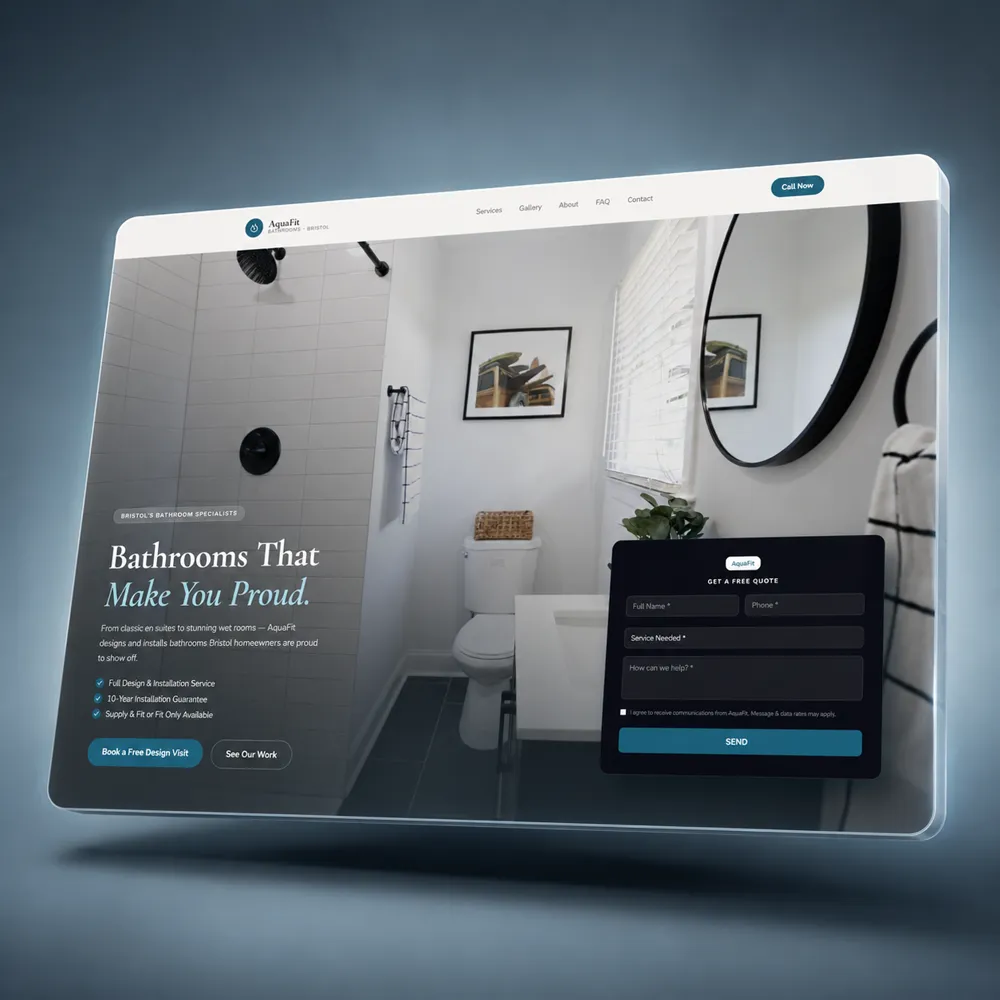
We build websites for bathroom fitters with your own finished rooms up front and the questions in this list answered on the page. You see a working concept of your own site before you pay anything. Plans start at 149 pounds a month with no upfront cost and no contract, and we look after the hosting, the domain and the updates.